środa, 7 marca 2018

American slang words and expressions

The popularity of American pop culture has made many US slang words common all over the world, but many expressions are still too obscure for a lot of us to understand.

We rounded up some of those expressions along with their definitions and examples on how to use them in a typical conversation.

You’ve probably heard some these from your favorite TV series or Hollywood flicks, and if you’re not familiar with them, here’s your chance to find out what they mean.               
 
 
  1. A dime a dozen – Something so plenty that it has become common and cheap
“Ideas like that are a dime a dozen these days.”

  1. Bail – To leave in a hurry; to escape or abandon something
“Fred bailed on me! We’re supposed to go shopping today.”

  1. Flake – To disappoint someone or fail at something; someone who doesn’t fulfil a duty
“I don’t think she’s interested in the project. She already flaked twice before.”

  1. For the birds – Something unimportant; trivial
“Just focus on the first three steps. The rest is for the birds.”

  1. Going Dutch – A group activity where the people involved pay for themselves
“We went Dutch because we didn’t want Mary to shoulder the big restaurant bill all herself.”

  1. Jack up – A sudden increase, typically in emotion or number; not functioning well
“That drink has me all jacked up for the race.”

  1. John Hancock – Signature
“Just put your John Hancock on the dotted line, and the deal is sealed.”

  1. Jonesing – Intense craving or desire for something
“I already had coffee this morning, but I’m still jonesing for a giant frappe.”

  1. New York Minute – A very short time; a quick moment
“She has very skilled hands. She did my hair in just a New York minute.”

  1. Pass the buck – To pass one’s responsibility to someone else
“After years of passing the buck, someone finally built a bridge leading to our secluded town.”

  1. Pig out – To Binge; overeat
“We pigged out on fries smothered with cheese.”

  1. Queen – A homosexual man who’s typically effeminate
“I could really take lessons on how to walk on heels from my queen friends.”

  1. Shoot the breeze – To pass time; a casual chitchat 
“They’re out on the balcony, shooting the breeze over a few bottles.”

  1. Shotgun! – In a group setting, it is an expression said by someone who wants to sit beside the driver of a vehicle; whoever calls first takes the front passenger seat.
“Shotgun! Passenger seat’s mine the whole ride!”

  1. Take a raincheck – An expression that is said if one is unsure of being able to accept an invitation, in hopes of showing up at a later time
“I might pick up my in-laws this weekend. Is it okay if I take a raincheck on the practice?”

  1. Trash – To damage or wreck
“After the party, the hotel room was totally trashed.”

  1. Wicked – excellent; can be an adverb in place of really
“He’s got some wicked moves that can definitely wow the crowd.”

  1. Wrap – To complete or finish something
“Just one more take, and it’s a wrap!”

  1. Zinger – A witty or amusing remark
“The mayor ended the speech with a zinger that made the audience laugh.”

  1. Zonked – Exhausted; tired
“I look super zonked in the wedding reception photos.”


sobota, 3 marca 2018

Pets at Vets'


The vet will STILL see you now! 

Pet owners share hilarious photos of their beloved animals trying to hide from surgery staff

As these photographs show, species of the animal kingdom including cats, dogs and rabbits will try many a tactic to avoid being seen by the medical professionals.  

Several dogs have opted for the old 'hide under the waiting room furniture' strategy, while the 'stand in the corner and pretend nothing is happening' appears to be a hit with both cats and canines. 


This white cat hilariously peaks over the rim of a sink as he tries to hide from the vet during a tense visit.


This cheeky cat believed if its head was hidden, he wouldn't be seen by vets.


This feline decided to turn her back on the medical practitioner in the hope the practice would magically disappear.


An anxious cat with a fixed stare looking anywhere but the camera used some leaflets to shield themselves from view.


This cat looked adorably terrified as it peaked behind the shelves in a vet's office.


An unhappy pug sits as far into the corner as he can in a bid to stave off his visit.


A black Labrador pulls the classic 'puppy dog eyes' face to demonstrate his unhappiness.


If I can't see you, you can't see me: Using a bench, this dog shielded his face from view while desperately hoping others couldn't see him too.


I uroczy film, którego nie jestem w stanie tutaj wstawić: 


piątek, 2 marca 2018

Atak zimy w UK - c.d.


No dobra, na Wyspach faktycznie mają zimę. Zdjęcia robią wrażenie, nawet nad Wisłą. Samochody przysypane równo z dachem, ludzie w wyziębionych, unieruchomionych godzinami pociągach i egzotyczne zwierzęta w śniegu.  A u nas tylko paskudnie zimno.
Ale podobno idzie już wiosna.😏


Więcej na:

czwartek, 1 marca 2018

British vs American spelling


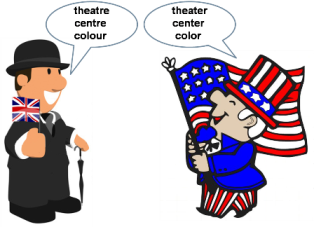
Czy wiecie, jaką pisownię macie ustawioną w komputerze, kiedy piszecie po angielsku? Jeżeli nie wiecie, to zapewne używacie pisowni amerykańskiej, ponieważ używacie oprogramowania stworzonego przez amerykańskie firmy. Jeśli otworzycie ustawienia, zobaczycie, że angielska pisownia obejmuje wiele wariantów: angielski (Australia), angielski (Filipiny) angielski (Indie), angielski (Indonezja), angielski (Irlandia), angielski (Kanada), i wreszcie angielski (Wielka Brytania). 

Jakie to ma znaczenie?

No cóż, dla celów potocznej komunikacji, używanie default settings, czyli pisowni amerykańskiej, pewnie nie ma większego znaczenia, oprócz tego, że uczycie się pisać color zamiast colour i center zamiast centre. Kiedy jednak przygotowujecie tekst dla celów zawodowych, prezentację, artykuł, warto wziąć pod uwagę, kim jest wasz odbiorca. Amerykaninem czy Brytyjczykiem, czy Europejczykiem posługującym się brytyjską odmianą języka. Warto także zastanowić się, jakiego wariantu angielskiego używa się i oczekuje w waszej firmie.

Dobra, może koniec końców to nie wpłynie na odbiór waszego tekstu, ale warto przynajmniej mieć świadomość istniejących różnic.
I o tym dzisiaj.

Różnice między brytyjskim a amerykańskim angielskim to przede wszystkim słownictwo. Lift w Stanach to elevator, chemist's to phmarmacy, tap (kran) to faucet, pavement to sidewalk. O różnicach w słownictwie przygotuję następny post. 

Dzisiaj trochę o pisowni.


There are several areas in which British and American spelling are different. The differences often come about because British English has tended to keep the spelling of words it has absorbed from other languages (e.g. French), while American English has adapted the spelling to reflect the way that the words actually sound when they're spoken.
If you're writing for British readers, you should only use British spellings. In one or two cases, the preferred American spellings are acceptable in British English as well, especially the -ize/-ization endings. While you can use both the -ise/-isation or the -ize/ization endings in British English, it's important to stick to one style or the other throughout the same piece of writing.
Here are the main ways in which British and American spelling are different.
Words ending in –re
British English words that end in -re often end in -er in American English:
British
US
centre
center
fibre
fiber
litre
liter
theatre
theater or theatre
Words ending in -our
British English words ending in -our usually end in -or in American English:
British
US
colour
color
flavour
flavor
humour
humor
labour
labor
neighbour
neighbor
Words ending in -ize or -ise
Verbs in British English that can be spelled with either -ize or -ise at the end are always spelled with -ize at the end in American English:
British
US
apologize or apologise
apologize
organize or organise
organize
recognize or recognise
recognize
Words ending in -yse
Verbs in British English that end in -yse are always spelled -yze in American English:
British
US
analyse
analyze
breathalyse
breathalyze
paralyse
paralyze
Words ending in a vowel plus l
In British spelling, verbs ending in a vowel plus l double the l when adding endings that begin with a vowel. In American English, the l is not doubled:
British
US
travel
travel
travelled
traveled
travelling
traveling
traveller
traveler

fuel
fuel
fuelled
fueled
fuelling
fueling
Words spelled with double vowels
British English words that are spelled with the double vowels ae or oe are just spelled with an e in American English:
British
US
leukaemia
leukemia
manoeuvre
maneuver
oestrogen
estrogen
paediatric
pediatric

Note that in American English, certain terms, such as archaeology, keep the ae spelling as standard, although the spelling with just the e (i.e. archeology) is usually acceptable as well.
Nouns ending with –ence
Some nouns that end with -ence in British English are spelled -ense in American English:
British
US
defence
defense
licence
license
offence
offense
pretence
pretense
Nouns ending with –ogue
Some nouns that end with -ogue in British English end with either -og or -oguein American English:
British
US
analogue
analog or analogue
catalogue
catalog or catalogue
dialogue
dialog or dialogue

The distinctions here are not hard and fast. The spelling analogue is acceptable but not very common in American English; catalog has become the US norm, but catalogue is not uncommon; dialogue is still preferred over dialog.
Aside from spelling differences, many items and practices have different names in British and American English. To explore further, see British and American terms.


e